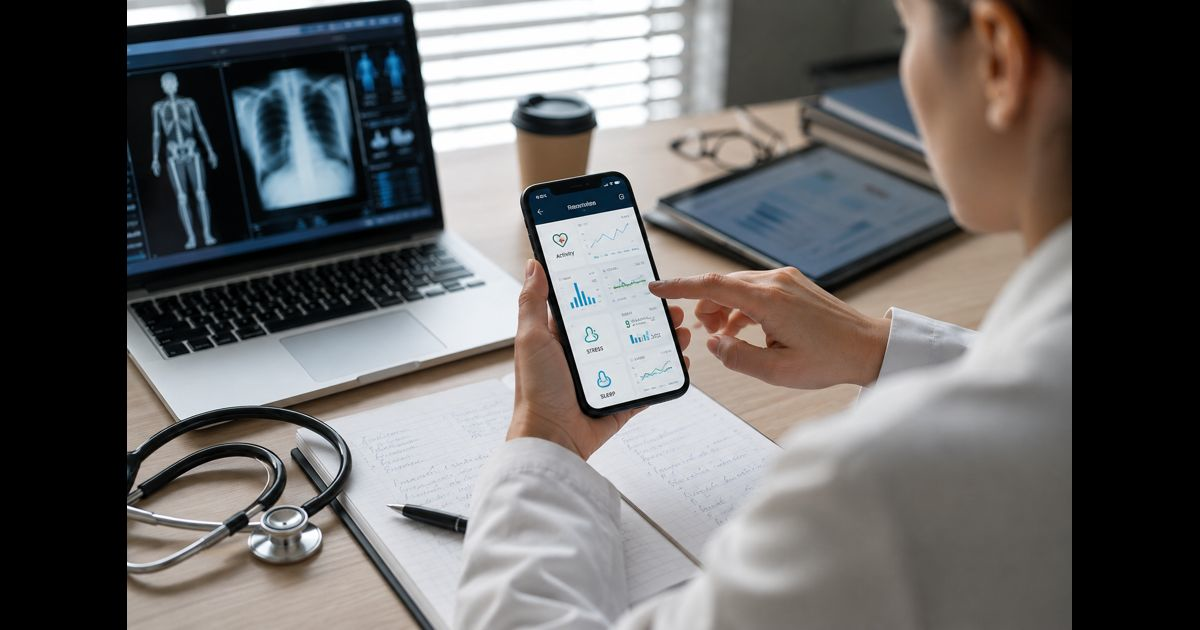
Health health thesindi com reflects a growing reality: health decisions increasingly begin on a screen. A person may read about symptoms, check a wearable dashboard, use a medication reminder, book a virtual appointment, or receive an AI-generated explanation before speaking with a clinician.
Digital tools can make health information easier to access and organize. They can also create false confidence when a result is misunderstood, a source is unclear, or a wellness feature is treated as a diagnosis. The useful question is not whether technology belongs in health care. It is whether the information is accurate, relevant to the individual, and used within its limits.
The Sindi’s health technology coverage can be read alongside this broader principle: technology may support care, but it does not replace clinical judgment.
Start with the source, not the claim
A polished website, a large following, or confident language does not make a health claim dependable. Before relying on information, check who published it, when it was updated, and what evidence supports it.
Government health agencies, academic medical centers, professional medical organizations, and established public-health institutions are generally better starting points for general education.
A credible page should make it possible to identify:
- Its author or medical reviewer
- The date it was reviewed or updated
- Sources for important claims
- The organization behind the publication
- Its purpose, including any commercial relationship
Be especially cautious with content that promises a rapid cure, treats one product as the answer to many unrelated problems, or discourages necessary medical care.
Separate information from diagnosis
Online health information can help a person prepare questions, understand common terms, or recognize when an issue may need attention. It cannot determine the cause of symptoms for a particular person.
Many symptoms overlap across conditions. Fatigue, headaches, digestive discomfort, sleep changes, and anxiety can each have many possible explanations. Personal history, medications, examination findings, and laboratory or imaging results may all change what a clinician concludes.
This distinction is important when reading symptom checkers or AI summaries. A tool may suggest possibilities based on general patterns. It does not have the full clinical context needed to diagnose safely.
Use digital information to support a conversation with a qualified professional, not to delay care when symptoms are severe, sudden, persistent, or worsening.
Treat wearable data as a signal, not a verdict
Fitness watches, sleep trackers, smart scales, and other consumer devices can make patterns easier to notice. Step counts, heart-rate trends, exercise consistency, and sleep routines may help people understand habits over time.
However, a measurement is only as useful as its accuracy and context. A wearable reading can be affected by device fit, movement, skin contact, software settings, and normal day-to-day variation. A high or low value does not automatically establish a medical problem, and a reassuring dashboard does not rule one out.
A sensible approach is to look for repeated changes rather than reacting to one unusual reading. If a device identifies a concerning pattern, record the dates, circumstances, and symptoms, then discuss that information with a clinician. Do not change prescribed medication or treatment solely because of a consumer-device result.
Ask what happens to personal health data
Health information is sensitive. Before using an app, review what it collects, why it collects it, who can receive it, and whether data can be deleted.
A nutrition, sleep, fertility, mental-wellness, or symptom-tracking app may gather more than basic account details. It may collect location data, usage patterns, health entries, device identifiers, or information inferred from activity. The privacy policy and account settings should explain data sharing and retention, though clarity varies widely.
Before entering personal information, consider:
- Is the company’s privacy policy understandable?
- Can data be shared with advertisers, analytics providers, or business partners?
- Can the account be deleted along with stored health information?
- Does the app offer strong account security, including multi-factor authentication?
- Is it necessary to provide every requested permission?
A free service may still have a business model based on data collection. Convenience should be balanced against privacy.
Be careful with AI-generated health explanations
AI can help translate complex language into plain English, create a list of questions for an appointment, or organize general information. It can also produce inaccurate, incomplete, or outdated statements in a convincing tone.
For that reason, an AI response should be checked against a reliable medical source or discussed with a clinician, pharmacist, or another qualified professional. This is particularly important for medication doses, pregnancy, children, older adults, mental-health crises, serious symptoms, and chronic conditions.
Never share another person’s private health details in a public AI tool. Remove names, dates of birth, account numbers, test identifiers, addresses, and other information that could identify someone.
The same caution applies to technology more generally: clear explanations about digital systems are useful, but technology and digital transformation should be understood alongside their real-world limits and responsibilities.
Know when online guidance is not enough
Seek urgent medical help or call emergency services when there are possible signs of a medical emergency, such as trouble breathing, chest pressure or pain, sudden weakness or numbness, fainting, severe allergic-reaction symptoms, uncontrolled bleeding, or sudden confusion.
For mental-health emergencies in the United States, call or text 988 for the Suicide & Crisis Lifeline. If there is immediate danger, call 911.
For non-emergency concerns, a clinician can help interpret symptoms, health readings, test results, and treatment options in the context of an individual’s complete situation. Online material is most valuable when it helps someone ask clearer questions and make informed decisions with appropriate care.
A practical way to use health technology
Digital health works best as part of a careful routine:
- Begin with a credible source for general information.
- Check publication dates and supporting evidence.
- Record patterns rather than overreacting to a single app or wearable reading.
- Protect personal health data through thoughtful privacy settings.
- Bring relevant records and questions to a qualified professional.
- Treat urgent or serious symptoms as a reason to seek timely care, not more online reading.
Health technology can improve access, tracking, and communication. Its value depends on how responsibly it is used. The strongest health decisions combine trustworthy information, personal context, and professional care when it is needed.