Bed bugs are not just a household problem—they can also find their way into your vehicle. A vehicle infestation often starts when bed bugs latch onto items like luggage, clothing, or bags and are unintentionally brought inside. Once inside your car, bed bugs take refuge in dark, tight spaces, going unnoticed until the problem worsens.
To address the problem, proper vehicle interior treatment can help eliminate existing bed bugs and reduce the risk of an infestation developing. Keep reading to discover how to spot bed bug activity, manage the problem, and protect your vehicle.
Why Vehicle Interiors Need Lasting Bed Bug Protection
Since bed bugs cannot fly or jump, they often get into your vehicle by hitching a ride on luggage, clothing, bags, and other belongings. Therefore, knowing how they get inside can help you limit the chance of a vehicle infestation. Common ways bed bugs enter your vehicle include the following:
- Luggage and travel bags: If you recently stayed in a hotel, rental property, or another place with bed bugs, they may hide inside your luggage. Then, once you put your bags inside the car, the bugs can move into seats, carpeting, or other nearby spaces.
- Clothing and personal belongings: Bed bugs may also travel on jackets, backpacks, purses, and other belongings. Consequently, placing affected items on a seat or floor can introduce bed bugs into the interior.
- Passengers and transported items: Passengers may unknowingly carry bed bugs on their belongings. Likewise, used furniture, boxes, and other secondhand items can introduce them into your vehicle.
Once bed bugs enter your car, waiting for the problem to disappear can allow them to remain hidden. Therefore, proper vehicle interior treatment is essential to address affected areas and support long-term bed bug prevention.
Vehicle Interior Treatment for Hidden Bed Bug Areas
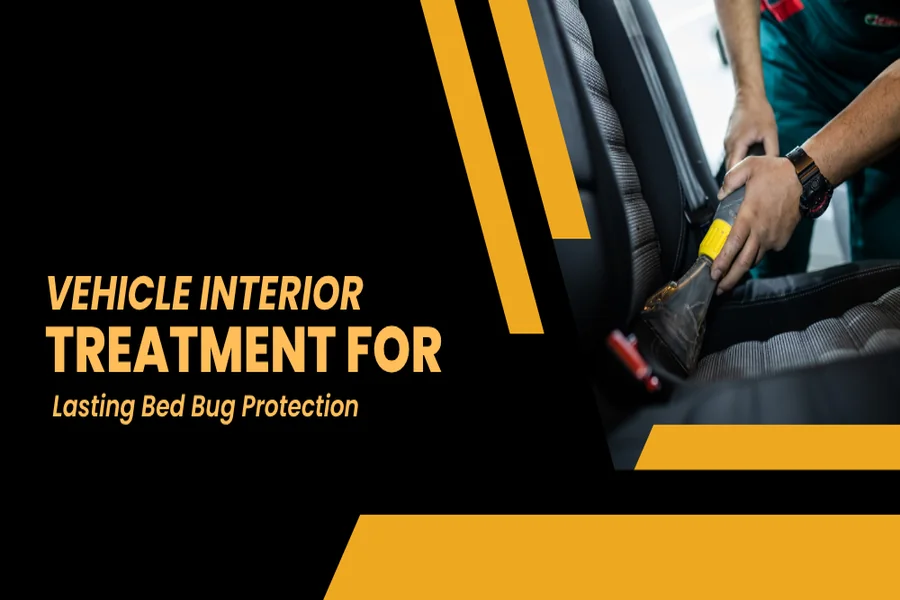
A car contains many narrow spaces that routine cleaning may not fully reach. For this reason, vehicle interior treatment should focus on the areas where bed bugs are most likely to hide. Important areas to inspect and address include the following:
- Upholstery seams, where the folds provide ample coverage.
- Under seats and seat rails provide dark, enclosed environments.
- Carpets, floor mats, and gaps between panels that go untouched during standard cleaning.
- Luggage, bags, and used belongings often spend time in cargo areas.
Simply removing a visible bed bug does not mean the problem is gone. Instead, effective vehicle interior treatment should account for multiple hiding places throughout your car.
Addressing a Vehicle Infestation With the Right Treatment
Simply vacuuming or cleaning isn’t enough to manage a vehicle infestation. A targeted treatment ensures a deep and lasting solution. Confined car interiors create unique challenges for bed bug removal. Here’s what a targeted approach addresses:
- Multiple fabric surfaces, such as seat cushions, where bugs can hide.
- Narrow cracks and small storage areas are ideal for bed bugs to hide.
- Specific problem areas that require specialized tools and knowledge for effective treatment.
A professional vehicle interior bed bug treatment offers the most thorough solution. Here’s how:
- Specialists use advanced methods to target all problem zones in your vehicle.
- Professional treatments handle severe infestations better than DIY approaches.
- These treatments provide lasting solutions, minimizing the potential for re-infestations.
Protecting the Vehicle Interior After Treatment
Even after treatment, bed bugs can re-enter your car if you transport infested belongings. Therefore, bed bug prevention should continue whenever you travel or carry items inside your vehicle. Here’s how you can keep your car pest-free:
- Inspect luggage after traveling: Check suitcases and travel bags before putting them back into your car, especially after staying in hotels or other shared accommodations.
- Check secondhand belongings: Before transporting used furniture, clothing, boxes, or other secondhand items, inspect them for signs of bed bugs. This can lower the chance of another vehicle infestation.
- Be careful with personal items: bags, coats, and backpacks can transport bed bugs. So, checking your belongings can become a useful part of routine bed bug prevention.
Regular inspections can help you spot potential activity before bed bugs become established throughout the vehicle. Moreover, monitoring the interior after vehicle interior treatment can help you respond to new signs sooner.
Bed Bug Prevention for Long-Term Protection
Treatment addresses the current problem, while prevention helps reduce the risk of another. Therefore, combining vehicle interior treatment with practical bed bug prevention habits can provide better long-term protection. Useful habits include the following:
- Regularly vacuum all areas of your vehicle, especially hard-to-reach spots.
- Keep your car clean and organized to minimize clutter that could harbor pests.
- Avoid leaving belongings like bags or clothing in your car for extended periods.
New bed bug activity does not always mean the previous treatment failed, as bed bugs can be reintroduced through new exposure. However, quick action can help protect the results of your vehicle interior treatment.
Make Every Drive Bed Bug-Free
In conclusion, managing a vehicle infestation requires attention to both visible and hidden bed bug activity. Proper vehicle interior treatment can address affected areas, while consistent bed bug prevention can help reduce the chance of bed bugs returning.
Furthermore, if you still notice bed bug activity, consider professional vehicle interior bed bug treatment to manage the infestation effectively. Taking prompt action can help maintain treatment results and keep your vehicle protected over time.