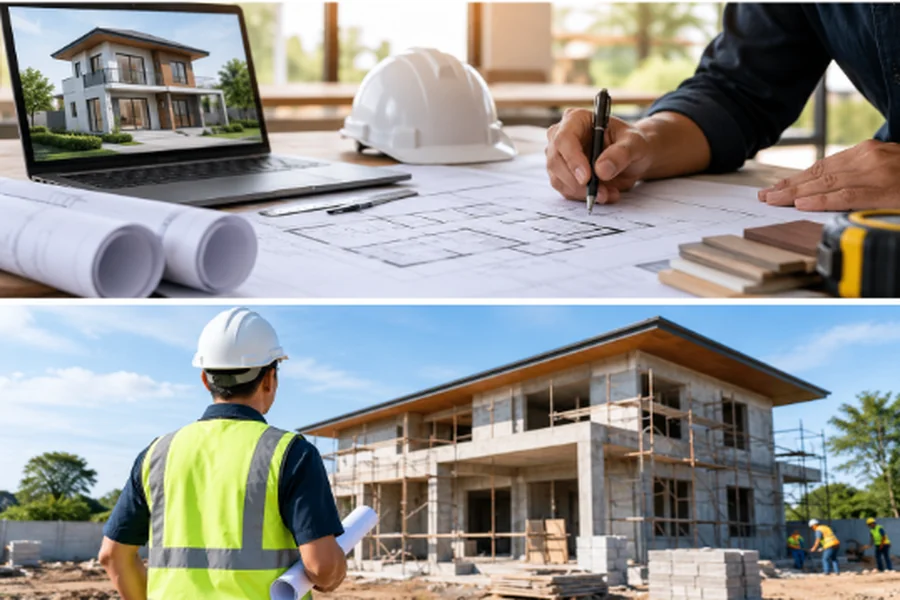
Planning an office, retail space, hospitality venue or other commercial interior project involves more than choosing finishes and agreeing on a layout. Before construction begins, one important decision is how the design and building work will be organised. Two common approaches are design and build and traditional contracting.
The difference comes down largely to how responsibility is divided. With a design and build arrangement, one main contractor or design-and-build firm manages both the design and construction stages. Working with an experienced design and build contractor can simplify project coordination, streamline communication and help ensure that design decisions align with construction requirements and the client’s budget. Under a traditional contracting approach, the client usually appoints a designer or architect separately before appointing a contractor to carry out the construction.
How Does Design and Build Work?
A design and build contractor brings design and construction services together under one main appointment. Instead of dealing with separate organisations for each stage, the client works primarily with one party responsible for coordinating the project from design development through construction.
The process often starts with a project brief. The client explains the intended use of the space, functional requirements, budget, preferred style and expected completion date. The design team then develops the concept while considering practical construction requirements from an early stage.
As the design develops, the contractor is involved in discussions about materials, construction methods, costs, sequencing and site requirements. Once the design is sufficiently developed, the project moves into procurement and construction.
How Does Traditional Contracting Work?
Traditional contracting separates the design and construction roles more clearly.
The client usually appoints an architect, interior designer or consultant to develop the design. The design progresses through drawings, specifications and other documentation before contractors are invited to submit prices or tenders for the construction work.
Once a contractor has been selected, the construction phase begins based on the agreed design and contract documents. The designer continues to have a role in administering or monitoring aspects of the project, depending on the contractual arrangement.
This structure gives the client a more direct relationship with the design team. Design decisions are developed before the contractor becomes responsible for construction, so the client has more opportunity to establish the intended design before moving into the building stage.
The Difference in Communication
Communication is one of the most noticeable differences between the two approaches.
With design and build, the client communicates primarily with one main organisation. Design and construction teams work within the same overall project structure, which helps information move between the two sides during the development process.
Traditional contracting involves more distinct relationships. The client communicates with the designer regarding design matters and with the contractor regarding construction matters. The designer and contractor also need to communicate with each other throughout the project.
Neither structure removes the need for clear communication. The difference is mainly where coordination sits within the project.
Design Control and Client Involvement
Traditional contracting often gives the client more direct control over the design process because the designer is appointed separately. The client works with the design team to establish layouts, materials, finishes and other details before selecting a contractor.
This approach suits clients who want to spend more time developing the design before construction begins.
With design and build, design decisions are developed alongside practical construction considerations. The client still provides direction and approves important decisions, but the contractor is involved earlier.
For a commercial project with a clear functional brief, this integrated approach provides a way to consider design, budget and construction requirements together.

Comparing Pricing and Budget Management
Cost management also follows different paths.
Under traditional contracting, the design is usually developed before construction pricing is obtained. This gives the client a clearer understanding of the intended scope before comparing contractor prices.
The quality of the design documentation therefore has an important influence on pricing. If details remain unclear, contractors might make different assumptions when preparing their quotations.
With design and build, cost considerations are introduced earlier. The contractor participates during design development, so materials, construction methods and programme requirements are considered alongside the design.
Managing Design Changes and Variations
Changes are common during construction. A client might request a different finish, adjust a layout or add a new requirement after work has started.
Under design and build, changes are usually coordinated through the main contractor, who can assess their effect on design, materials, labour and programme.
Under traditional contracting, a change might involve communication between the client, designer and contractor. The designer may need to revise drawings or specifications before the contractor prices and carries out the change.
The financial and programme impact depends on the nature and timing of the change. A well-defined brief before construction begins helps reduce unnecessary changes under either approach.
Final Thoughts
Design and build and traditional contracting organise a project in different ways. Design and build brings design and construction together under a more integrated structure, while traditional contracting separates the design and construction appointments.
The difference affects communication, design control, pricing, procurement, programme management and responsibility for the completed work. Before making a decision, consider how involved you want to be in the design process, how you prefer responsibilities to be managed and how clearly the project’s requirements have been defined.